
News

Fluoramics Introduces Poly-U™ as PTFE- and PFAS-Free Polyurethane Thread Seal Tape
Poly-U™ is a polyurethane-based thread seal tape designed to provide reliable sealing performance without the use of PTFE or PFAS. The fluoropolymer-free formulation aims to meet growing regulatory and environmental requirements while maintaining durability and sealing strength for industrial applications.

Nonwovenn Expands PFAS-Free Filter Media for Ostomy Care Products
Nonwovenn has expanded its PFAS-free activated carbon filter media used in ostomy pouches. The material provides odor and gas adsorption with low-pressure drop while supporting compliance with evolving PFAS regulations in medical device markets.

Sunlight-Activated Catalyst Developed to Break Down PFAS
University of Bath researchers have developed a carbon-based photocatalyst that uses sunlight to degrade PFAS contaminants. Created with partners including University of São Paulo, University of Edinburgh, and Swansea University, the catalyst combines carbon nitride with a microporous polymer to capture PFAS and break them down into carbon dioxide and fluoride.

Flinders University Develops Molecular Cage Adsorbent to Capture Short-Chain PFAS
Flinders University researchers have developed a nano-sized molecular cage adsorbent capable of capturing difficult-to-remove short-chain PFAS from water. Embedded into mesoporous silica, the material removed up to 98% of PFAS in laboratory tests and demonstrated reusability across multiple cycles, highlighting potential for advanced water filtration systems.

Yangi Launches Production-Ready Dry-Formed Fiber Food Tray Using Cellera® Technology
Yangi has introduced a production-ready dry-formed fiber tray enabled by its Cellera® platform, a turnkey manufacturing system for high-volume fiber packaging. The tray is made from renewable virgin fibers with a PFAS-free composition and selective laminate barrier, offering scalable production and up to 80% lower CO? impact compared with plastic packaging.
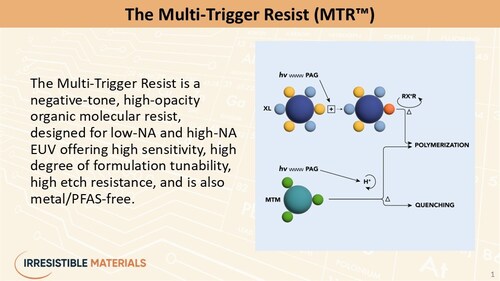
Irresistible Materials and TOK Partner to Advance PFAS-Free EUV Photoresists
Irresistible Materials and Tokyo Ohka Kogyo have formed a strategic investment and joint development partnership to commercialize the Multi-Trigger Resist (MTR) platform for extreme ultraviolet lithography. The collaboration focuses on developing PFAS/PFOS-free and metal-free photoresist formulations while maintaining the resolution and sensitivity required for next-generation semiconductor manufacturing.

New Mexico Launches PFAS Dashboard for Public Drinking Water Systems
New Mexico Environment Department has launched an interactive dashboard that allows residents to view PFAS testing results for local public water systems. The platform supports transparency around sampling efforts and will be regularly updated as new monitoring data becomes available.

Toray Develops PFAS-Free Flexible PPS Resin with Flame Retardancy and Heat Resistance
Toray Industries has developed a flexible polyphenylene sulfide (PPS) resin that combines high heat resistance and UL94 V-0 flame retardancy while being PFAS-free. Enabled by the company’s NANOALLOY® microstructure control technology, the material is designed for applications such as cooling pipes and wiring components.
Industry leaders use Knowledge Hub to explore 509+ Forever Chemicals news
Gain unparalleled insights, and drive your innovation forward.
Let’s shape tomorrow, today!